

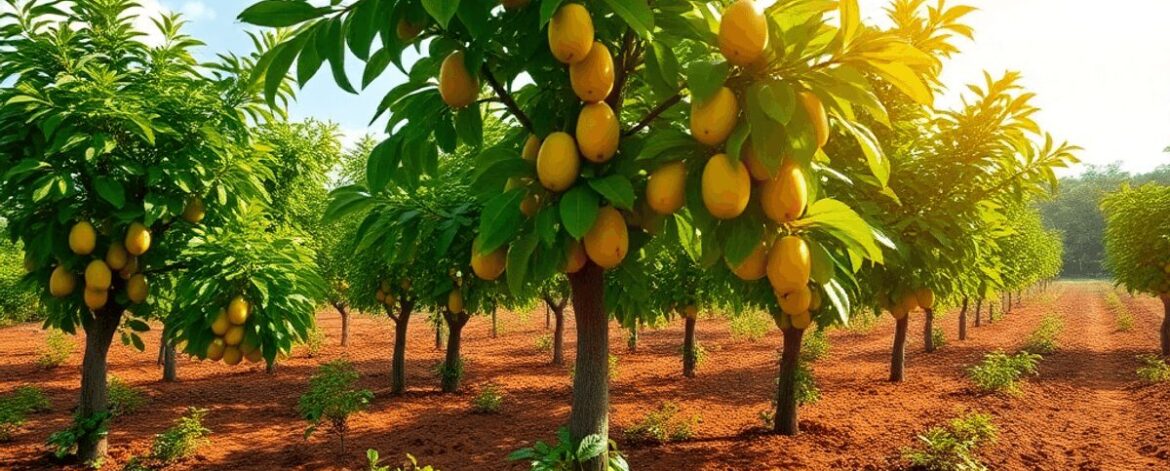
Organic farming is a key part of sustainable agriculture in Kenya. Here, fruit growers use natural methods to grow their crops without relying on synthetic pesticides or fertilizers. This approach not only helps the environment but also allows farmers to produce high-quality fruits using a combination of traditional practices and modern techniques.
Many Kenyan fruit growers have experienced great success with organic farming. Here are some of the benefits they have seen:
- Higher Yields: Some farmers have reported up to 30% increase in fruit production.
- Healthier Soil: Organic farming promotes natural processes that improve soil fertility.
- Better Market Access: Farmers who practice organic farming can sell their products at higher prices in international markets.
- Lower Production Costs: By reducing their reliance on expensive chemical inputs, farmers can save money on production costs.
The agricultural landscape in Kenya offers unique opportunities for organic fruit production. The country has favorable climate conditions and a growing demand for organic products in the market. In this guide, we will explore how local farmers are implementing various organic techniques to increase productivity while also preserving their land’s natural resources for future generations.
We will delve into practical methods used by successful Kenyan fruit growers such as pest management strategies and soil conservation practices. These approaches have proven effective in transforming fruit farming across different regions of Kenya known for its diverse agriculture.
1. Key Organic Farming Techniques Used by Kenyan Fruit Growers
Kenyan fruit growers employ several innovative organic farming techniques that have transformed their agricultural practices. These methods blend traditional knowledge with modern sustainable approaches to establish resilient farming systems.
Push-Pull Technology for Pest Management
Push-pull technology is a fundamental method of organic pest management used in Kenyan fruit orchards. This clever technique involves strategic intercropping to naturally control pests and improve soil fertility.
How Push-Pull Works:
- Plant desmodium between fruit trees – repels pests and suppresses striga weed
- Surround orchards with napier grass – attracts and traps harmful insects
- Create natural barriers with companion plants – prevents pest migration
Key Benefits:
- Reduces pest populations by 80%
- Eliminates need for chemical pesticides
- Controls striga weed infestations
- Improves soil nitrogen content
- Provides additional fodder for livestock
The push-pull system requires careful planning and implementation. Farmers plant specific combinations of crops that work together to protect fruit trees:
- Repellent Plants (Push):Desmodium
- Molasses grass
- Lemon grass
- Marigolds
- Trap Plants (Pull):Napier grass
- Sudan grass
- Brachiaria
While this method requires more initial labor investment, Kenyan farmers report 20-30% yield increases and significant reductions in pest-related losses. The system creates a self-sustaining ecosystem where beneficial insects thrive and harmful ones are naturally controlled.
The success of push-pull technology has led to its widespread adoption across fruit-growing regions in Kenya, particularly in mango, citrus, and avocado orchards. Research stations continue to refine plant combinations and spacing recommendations to optimize results for different fruit varieties and local conditions.
Integrated Pest Management (IPM) with Biological Agents
IPM practices in Kenyan fruit orchards harness nature’s own defense mechanisms to protect crops. Birds serve as natural pest controllers – installing bird perches and nesting boxes attracts beneficial species like weaverbirds and sunbirds that feed on harmful insects.
The application of worm juice, a nutrient-rich liquid produced by earthworms, creates a dual benefit:
- Acts as a natural pesticide against common fruit pests
- Provides essential nutrients that strengthen plant immunity
Local farmers incorporate these biological control methods:
- Release of predatory insects like ladybugs to control aphids
- Introduction of parasitic wasps that target fruit flies
- Planting of companion flowers to attract beneficial insects
- Use of neem-based solutions derived from local trees
These natural pest management strategies create a balanced ecosystem where:
- Beneficial insects thrive and control pest populations
- Soil microorganisms remain active and healthy
- Plant health improves naturally through enhanced resistance
- Chemical residues are eliminated from fruit products
Kenyan fruit growers report significant success with IPM, noting reduced crop damage and improved fruit quality. The system proves particularly effective for mango, avocado, and citrus cultivation, where pest pressure traditionally demands high chemical inputs.
The adoption of IPM practices aligns with organic certification requirements while maintaining consistent crop yields. These methods preserve native biodiversity and support long-term orchard sustainability.
Soil Health Management Practices
Kenyan fruit growers implement specific soil management techniques to maintain optimal soil health without synthetic fertilizers. These practices create a foundation for sustainable organic farming while promoting biodiversity and long-term productivity.
Core Soil Management Techniques:
1. Composting
- Mixing fruit waste with livestock manure
- Adding green materials like grass clippings
- Creating nutrient-rich humus for natural fertilization
- Alternating fruit trees with nitrogen-fixing legumes
- Rotating annual crops between tree rows
- Breaking pest and disease cycles naturally
- Preventing soil erosion during heavy rains
- Adding organic matter to improve soil structure
- Supporting beneficial soil microorganisms
Farmers use locally available materials to create rich compost mixtures, incorporating indigenous knowledge with modern composting methods. A typical rotation cycle spans 3-4 years, allowing soil to regenerate between intensive cropping periods.
Traditional Kenyan cover crops like desmodium and mucuna protect soil during dry seasons while fixing nitrogen naturally. These plants create living mulch systems that suppress weeds and retain soil moisture, reducing the need for external inputs.
Research shows these combined practices increase soil organic matter by up to 25% within two growing seasons, leading to improved water retention and enhanced nutrient availability for fruit trees.
Water Conservation Techniques in Organic Farming
Water scarcity poses significant challenges for Kenyan fruit growers. Smart water management through innovative conservation techniques helps farmers maintain productive orchards while reducing water consumption.
1. Drip Irrigation Systems
- Delivers water directly to plant roots
- Reduces water waste by 30-50%
- Prevents soil erosion and nutrient leaching
- Allows precise control of water distribution
2. Mulching Practices
- Organic materials like straw or dried grass retain soil moisture
- Reduces evaporation rates by up to 70%
- Suppresses weed growth
- Regulates soil temperature
3. Rainwater Harvesting
- Collection systems capture rainfall during wet seasons
- Storage in tanks or reservoirs for dry periods
- Reduces dependence on groundwater
- Provides clean water for irrigation
4. Soil Moisture Monitoring
- IoT sensors track soil moisture levels
- Real-time data helps optimize irrigation schedules
- Prevents over-watering
- Reduces water consumption by 20-30%
These water conservation methods create resilient farming systems capable of withstanding climate change impacts. Kenyan fruit growers who implement these techniques report significant improvements in water efficiency while maintaining fruit quality and yields.
The combination of drip irrigation with other water-saving practices enables farmers to expand production even in water-stressed regions. Small-scale growers can start with basic conservation methods and gradually upgrade to more advanced systems as their operations grow.
2. Sustainable Sourcing and Certification for Market Access
European markets show increasing demand for certified organic fruits from Kenya. Certification proves your commitment to sustainable farming practices while opening doors to premium markets.
Key Certifications Available for Kenyan Fruit Growers:
- GlobalG.A.P. Certification: Demonstrates good agricultural practices, required by many European retailers, with a focus on food safety and traceability.
- EU Organic Certification: Essential for direct exports to the European Union, strict compliance with EU organic regulations, with annual audits to ensure standards maintenance.
- Fair Trade Certification: Guarantees fair prices for farmers, supports community development projects, and creates direct trade relationships.
The certification process requires:
- Detailed record-keeping of farming practices
- Regular soil testing
- Pest management documentation
- Harvest and post-harvest handling procedures
Certified organic fruits command 20-30% higher prices in international markets. Your investment in certification typically pays off within 2-3 growing seasons through premium pricing and expanded market access.
Local certification bodies like Kenya Organic Agriculture Network (KOAN) provide guidance and support throughout the certification journey. They help you navigate requirements, prepare documentation, and connect with potential buyers in premium markets.
3. Value Addition Strategies for Organic Fruits
Value addition transforms raw organic fruits into processed products, creating new income streams for Kenyan farmers. Solar drying stands out as a cost-effective processing technique that preserves fruit quality while extending shelf life.
Key Processing Methods:
- Solar drying of mangoes, pineapples, and bananas
- Production of organic fruit jams and preserves
- Creation of fruit pulp and purees
- Development of dried fruit snacks
Benefits of Solar Drying:
- Reduces post-harvest losses by up to 30%
- Preserves nutritional value
- Requires minimal energy input
- Creates year-round product availability
Kenyan farmers can implement these value addition strategies through:
- Individual Processing UnitsSmall-scale solar dryers
- Basic fruit processing equipment
- Home-based preservation methods
- Cooperative Processing CentersShared facilities and equipment
- Bulk processing capabilities
- Combined marketing efforts
The market for processed organic fruits continues to grow, with dried fruits commanding premium prices in local and international markets. Kenyan farmers who invest in value addition report income increases of 40-60% compared to selling fresh fruits alone.
Processing organic fruits creates opportunities for:
- Direct sales to health food stores
- Export to specialty markets, which may require setting up a FSMA HACCP certified facility
- Supply to organic food manufacturers
- Local supermarket distribution
4. Adoption of Agritech Solutions in Organic Farming
Technology is changing the way organic farming is done in Kenya with new digital solutions. Modern agritech tools help fruit growers keep up with organic certification standards while improving their operations.
Satellite-Based Monitoring Systems
- Real-time crop health assessment
- Early detection of pest infestations
- Precise mapping of organic farming zones
- Weather pattern analysis for informed decision-making
AI-Driven Advisory Systems
- Personalized recommendations based on soil conditions
- Disease identification through image recognition
- Yield prediction models
- Automated compliance tracking for organic certification
Smart IoT Solutions
- Soil moisture sensors for optimal irrigation
- Automated nutrient monitoring systems
- Weather stations for microclimate data
- Remote field monitoring capabilities
Blockchain Integration
- Digital tracking of organic certification
- Supply chain transparency
- Product authenticity verification
- Consumer trust building through traceable produce history
These technological solutions help Kenyan fruit growers reduce operational costs while maintaining organic standards. Small-scale farmers access these tools through cooperative models and mobile applications, making advanced technology accessible across different farm sizes.
Local tech startups develop customized solutions for Kenyan conditions, considering factors like limited internet connectivity and power supply. These innovations create a bridge between traditional organic farming methods and modern agricultural technology.
Benefits of Organic Farming Techniques for Kenyan Fruit Growers
Kenyan fruit growers implementing organic farming techniques have experienced substantial benefits across multiple aspects of their operations:
1. Increased Yields and Income
- Documented yield improvements of up to 30% compared to conventional farming methods
- Premium pricing opportunities through organic certification
- Reduced production costs by eliminating expensive synthetic inputs
2. Environmental Sustainability
- Significant reduction in chemical pesticide and fertilizer usage
- Enhanced soil health through natural fertility management
- Preservation of local biodiversity and ecosystem services
3. Climate Change Resilience
- Improved water retention in soil through organic matter management
- Better crop resistance to extreme weather conditions
- Diversified income streams reducing vulnerability to climate-related losses
4. Market Access and Growth
- Direct access to high-value European organic markets
- Strong positioning in local markets with growing organic demand
- Long-term buyer relationships through certification programs
These benefits create a positive cycle where improved soil health leads to better yields, which enables higher profits for reinvestment in sustainable practices. Kenyan fruit growers adopting organic methods report stronger financial stability and increased farm resilience year after year.
The Future of Organic Farming in Kenya
The future of organic farming in Kenya depends on combining traditional knowledge with new technologies. Local farmers have a strong understanding of their land, weather, and native farming techniques, which provides a solid base for sustainable fruit production.
Key developments shaping Kenya’s organic farming future:
- Integration of AI-powered farming apps with traditional knowledge systems
- Expansion of farmer-to-farmer learning networks through digital platforms
- Development of climate-smart agricultural practices specific to Kenyan conditions
- Growth of local organic certification programs
The increasing global demand for organic produce puts Kenyan fruit growers in a prime position for sustainable agriculture. Young farmers are increasingly embracing organic methods, combining ancestral farming practices with modern precision agriculture tools.
Success in organic farming requires:
- Continuous adaptation of farming techniques
- Investment in farmer education and training
- Strong support networks and knowledge sharing
- Commitment to sustainable practices
The future looks bright for organic farming in Kenya, with more fruit growers switching to sustainable methods and meeting certification standards. This change is beneficial for food security, environmental conservation, and economic growth in Kenya’s agricultural sector.
FAQs (Frequently Asked Questions)
What are the key organic farming techniques used by Kenyan fruit growers to enhance productivity?
Kenyan fruit growers utilize several organic farming techniques including Push-Pull Technology for pest management, Integrated Pest Management (IPM) with biological agents, soil health management practices like composting and crop rotation, and water conservation methods such as drip irrigation. These methods collectively improve yields, manage pests naturally, maintain soil fertility, and conserve water resources.
How does Push-Pull Technology benefit organic fruit farming in Kenya?
Push-Pull Technology involves intercropping insect-repelling legumes with pest-attracting plants to naturally manage pests and control striga weed. This technique reduces the need for chemical pesticides, improves soil fertility, increases crop yields and income for farmers, despite requiring higher labor input. It is a sustainable pest management strategy widely adopted in Kenyan organic fruit farming.
What role does integrated pest management (IPM) play in Kenyan organic fruit farming?
Integrated Pest Management (IPM) in Kenyan organic fruit farming employs natural predators like birds and organic inputs such as worm juice to control pests without synthetic chemicals. IPM helps maintain ecological balance, ensures crop health, and supports sustainable agriculture by reducing chemical dependency and promoting biodiversity.
Why is soil health management important in organic farming for Kenyan fruit growers?
Soil health management is crucial as it maintains and improves soil fertility through practices like composting, crop rotation, and cover cropping. Avoiding synthetic fertilizers promotes biodiversity and long-term productivity of the land. Healthy soil supports robust fruit crops, leading to better yields and sustainability in Kenyan organic farming systems.
How do certification schemes benefit Kenyan organic fruit growers in accessing international markets?
Certification schemes such as GlobalG.A.P., EU Organic Certification, and Fair Trade Certification help Kenyan organic fruit growers meet international standards for sustainability. These certifications open access to premium European markets, enabling farmers to command higher prices and improve their market opportunities while promoting sustainable agriculture practices.
What technological advancements are supporting organic fruit production among Kenyan farmers?
Agritech solutions including satellite-based crop monitoring, AI-driven advisory systems for best practices, IoT sensors for precise water and nutrient management, and blockchain technology for supply chain transparency are increasingly supporting Kenyan organic fruit production. These technologies enhance efficiency, ensure certification compliance, conserve resources, and improve overall farm management.