


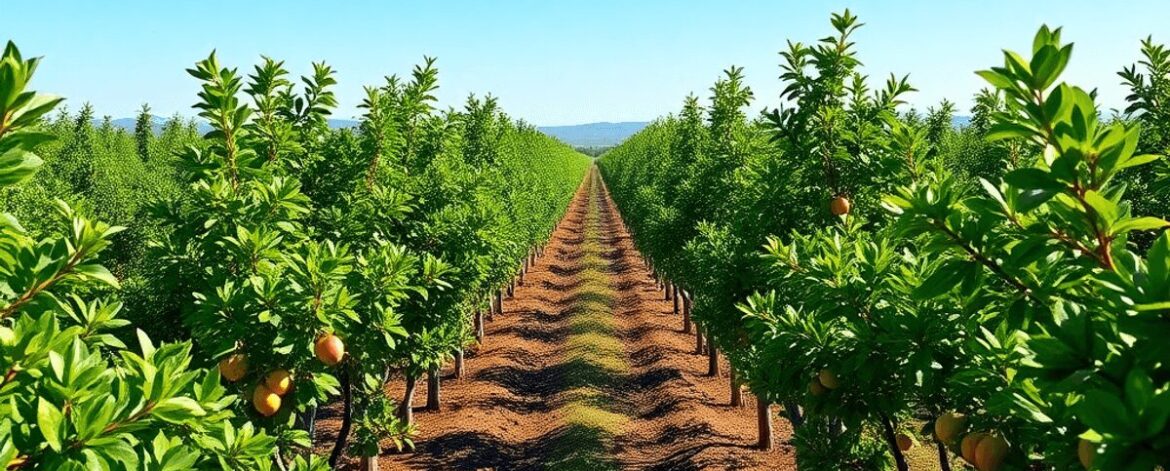
Young orchards require careful water management to thrive. These young trees have shallow roots that can’t reach deep soil moisture, so efficient irrigation is essential for their survival and growth.
The Importance of Modern Irrigation Methods
Modern irrigation methods have transformed the way we care for young orchards. These systems deliver water with unmatched precision, ensuring each tree gets exactly what it needs to grow optimally. From smart drip systems to automated moisture sensors, various technologies are reshaping traditional orchard management practices.
The Impact of Proper Irrigation on Fruit Development
The effects of effective irrigation on fruit development are significant:
- Enhanced Size: Consistent water supply promotes larger, more marketable fruit
- Improved Quality: Balanced irrigation prevents stress-related defects
- Higher Yields: Well-hydrated trees produce better crop loads
- Stronger Root Systems: Strategic water delivery encourages robust root development
The success of your young orchard relies on these advanced irrigation methods. By embracing precise water management techniques, you’re investing in trees that will bear high-quality fruit for many years.
1. Drip Irrigation and Micro-Sprinklers
Drip Irrigation
Drip irrigation systems deliver water directly to your young trees’ root zones through a network of tubes with small holes or emitters. This precision targeting reduces water waste and ensures each tree receives its required water amount.
Key Benefits of Drip Irrigation:
- Maintains consistent soil moisture levels
- Reduces weed growth between rows
- Allows fertilizer application through the system
- Prevents leaf wetness, reducing disease risks
Micro-Sprinklers
Micro-sprinklers create a fine mist spray pattern that covers a wider area than drip systems. These sprinklers operate at low pressure, producing water droplets that gently saturate the soil without causing erosion or soil compaction.
Micro-Sprinkler Advantages:
- Creates uniform water distribution patterns
- Provides frost protection capabilities
- Adapts to different soil types
- Allows root zone expansion
Water-Saving Features
Modern irrigation systems incorporate water-saving features like pressure-compensating emitters and anti-drain valves. These components prevent water loss through evaporation by:
- Delivering water at optimal pressure
- Stopping flow when system pressure drops
- Maintaining consistent application rates
- Preventing emitter clogging
Your choice between drip irrigation and micro-sprinklers depends on factors like soil type, tree spacing, and climate conditions. Both systems offer precise water control and significant water savings compared to traditional irrigation methods.
2. Soil Moisture Monitoring and Smart Irrigation Technologies
Precision water management in young orchards starts with accurate soil moisture monitoring. Modern sensors provide real-time data on soil water content, helping you make informed irrigation decisions that protect your investment.
Key Monitoring Tools:
- Tensiometers measure soil water tension
- Capacitance probes track moisture at different depths
- Weather stations collect environmental data
- Smart soil probes with wireless connectivity
These monitoring systems create detailed moisture profiles across your orchard blocks. You’ll see exactly how water moves through the soil profile and identify areas needing adjustment. The data helps you maintain optimal moisture levels during critical growth stages.
Smart Irrigation Integration
Smart drip systems connect directly to your moisture sensors, creating an automated response to soil conditions. The system adjusts water delivery based on:
- Real-time moisture readings
- Local weather data
- Historical irrigation patterns
- Crop water demand curves
You can set moisture thresholds that trigger automatic irrigation cycles. When soil moisture drops below your specified level, the system activates to restore optimal conditions. This precision prevents stress from both over-watering and under-watering.
Data-Driven Decision Making
Modern irrigation platforms provide user-friendly dashboards to visualize your orchard’s water status. You’ll access:
- Moisture trend analysis
- Weather forecasts
- Water usage reports
- System performance metrics
These insights help you fine-tune irrigation schedules and respond to changing conditions. Remote monitoring through mobile apps lets you manage irrigation from anywhere, saving time and ensuring consistent care.
The combination of accurate monitoring and automated response creates a dynamic system that adapts to your orchard’s needs. Young trees receive precisely the right amount of water at the right time, supporting healthy root development and optimal growth.
3. Water Management Strategies and Cultural Practices for Young Orchards
Pre-season planning is crucial for effective water management in young orchards. Before the growing season starts, make sure to:
- Check your irrigation system thoroughly
- Find and fix any leaks
- Ensure that water is distributed evenly across the orchard
Creating a detailed irrigation schedule based on historical weather data and the specific needs of your trees will help you use water efficiently right from the beginning.
Pulse Irrigation Implementation
Instead of watering for long periods, implement pulse irrigation by breaking up the cycles into shorter, multiple events. This method has several advantages:
- Water will gradually penetrate the soil, reaching deeper roots
- Surface runoff will be reduced by 40-60%, preventing water wastage
- Optimal soil moisture conditions will be created for healthy root development
Crop Load Management
The amount of fruit on your trees directly affects how much water they need. To manage this effectively, consider these strategic pruning practices:
- Remove excess fruit during the early stages of development to redirect energy towards root growth
- Maintain appropriate leaf-to-fruit ratios to ensure balanced photosynthesis and fruit production
- Focus on developing strong root systems that can access water resources more efficiently
- Reduce competition for water by managing neighboring plants or trees
Cultural Practices for Water Conservation
Applying organic mulches around your young trees can provide multiple benefits:
- Create a protective layer that reduces soil evaporation
- Suppress weed growth and competition for water
- Improve soil structure and its ability to retain moisture
- Maintain consistent soil temperature, promoting healthy root activity
Integrating cover crops between tree rows can also contribute to water conservation efforts:
- Prevent soil erosion caused by wind or water runoff
- Enhance water infiltration into the ground, allowing more rainwater to be absorbed
- Build organic matter content in the soil, improving its overall health and fertility
- Support beneficial soil microorganisms that play a role in nutrient cycling
Timing of Cultural Operations
The timing of your cultural operations can significantly impact how efficiently water is used in your orchard. Plan maintenance activities such as mowing or pruning during periods when evaporative demand is lower (e.g., early morning or late afternoon). This way, you minimize moisture loss through evaporation.
Additionally, adjust your irrigation volumes based on seasonal growth patterns and fruit development stages. For example, during periods of rapid growth or when fruits are nearing maturity, increase the amount of water supplied to meet their higher demands.
Monitoring Tree Response
Regularly monitor how your trees respond to different water management practices. Look out for signs of water stress such as wilting leaves or changes in shoot growth patterns. These indicators can help you identify areas where adjustments may be needed.
Keep track of successful strategies that have worked well in previous seasons and document any areas that require improvement for future years. This will allow you to continuously refine your approach and achieve better results over time.
4. Environmental Adaptations and Their Role in Young Orchards’ Water Management Strategy
Physical barriers like hail netting and shade structures serve a dual purpose in young orchards – protecting trees from extreme weather while reducing water consumption. These adaptations create a microclimate that significantly impacts irrigation requirements.
Hail Netting Benefits:
- Reduces direct sunlight exposure by 15-25%
- Creates uniform shade patterns across orchard blocks
- Decreases wind speed, limiting moisture loss
- Maintains higher humidity levels under the canopy
Shade Structure Advantages:
- Blocks up to 30% of solar radiation
- Minimizes heat stress on young trees
- Reduces soil temperature fluctuations
- Extends irrigation intervals
The installation of these protective structures directly influences evapotranspiration rates in young orchards. Research shows a 20-30% reduction in water loss through evaporation when using appropriate shading systems. Young trees under protective structures display improved water use efficiency, requiring less frequent irrigation cycles.
Key Water Conservation Effects:
- Lower leaf temperature reduces water demand
- Decreased soil evaporation rates
- Enhanced moisture retention in root zones
- Improved distribution of available water
Growers can maximize these benefits by selecting appropriate mesh densities and colors for their specific climate conditions. White or pearl-colored netting reflects excess heat while maintaining adequate light levels for photosynthesis and fruit development.
Conclusion
Modern irrigation methods transform young orchard management into a precision-driven endeavor. These advanced systems create healthy root systems through targeted water delivery, maximizing fruit sizing potential and yield optimization. Your investment in smart irrigation technologies pays dividends through reduced water waste and enhanced fruit quality.
The path to a sustainable future for young orchards lies in the strategic implementation of:
- Data-driven irrigation decisions
- Precision water delivery systems
- Environmental adaptation techniques
- Smart monitoring technologies
These practices build resilient orchards that withstand climate challenges while maintaining profitability. By embracing these irrigation innovations, you position your young orchard for long-term success, balancing resource conservation with optimal crop production.
FAQs (Frequently Asked Questions)
What are the benefits of using drip irrigation and micro-sprinklers in young orchards?
Drip irrigation and micro-sprinklers offer significant water efficiency benefits for young orchards by delivering water directly to the root zone, minimizing evaporation losses, and ensuring precise water distribution. These modern irrigation systems help conserve water while promoting healthy fruit growth.
How does soil moisture monitoring improve irrigation management in young orchards?
Soil moisture monitoring uses sensors to provide real-time data that guides irrigation scheduling, preventing both over-watering and under-watering. By leveraging smart drip systems with automated controls, growers can optimize water use based on soil moisture levels and weather data, enhancing overall water management.
What water management strategies are essential for young orchard health?
Effective strategies include pre-season planning to forecast water needs, implementing pulse irrigation to reduce water loss, managing crop load to balance tree vigor, and applying organic mulches to improve soil health. These cultural practices complement modern irrigation methods for sustainable orchard development.
How do environmental adaptations like hail netting and shade structures contribute to water conservation in young orchards?
Environmental adaptations such as hail netting and shade structures reduce evapotranspiration rates by providing protective cover, which lowers the trees’ water requirements. This approach helps decrease irrigation needs, contributing to more efficient water management in young orchards.
Why is efficient water delivery critical for fruit growth in young orchards?
Efficient water delivery ensures that young trees receive adequate moisture for developing healthy root systems and optimal fruit sizing. Proper irrigation supports yield optimization and economic sustainability by enhancing fruit quality while conserving valuable water resources.
How do modern irrigation methods support a sustainable future for young orchards?
Modern irrigation methods combine precise water application techniques with smart technologies and cultural practices to maximize efficiency. This integrated approach promotes sustainable orchard management by reducing water waste, improving fruit quality, supporting healthy tree growth, and ultimately achieving economic sustainability.